AI FOR
PUBLIC
RELATIONS.

The move from experimentation to implementation.
The practical guide to applying AI effectively, ethically and at scale in public relations, written by practitioners for practitioners. Edited by Stephen Waddington and Ben Verinder and published by Kogan Page. And now a course for senior practitioners.

The challenge
AI is reshaping how communications work gets planned, produced and measured. Most practitioners are experimenting. Few organisations have moved to structured implementation.
Public relations is positioned to lead on the questions organisations are now wrestling with. How AI is embedded in work. How to manage the behavioural changes required for successful AI adoption. How it is governed internally. How organisations remain visible as audiences shift from search engines to large language models.
Each of these is a reputational question before it is a technical one.

The book
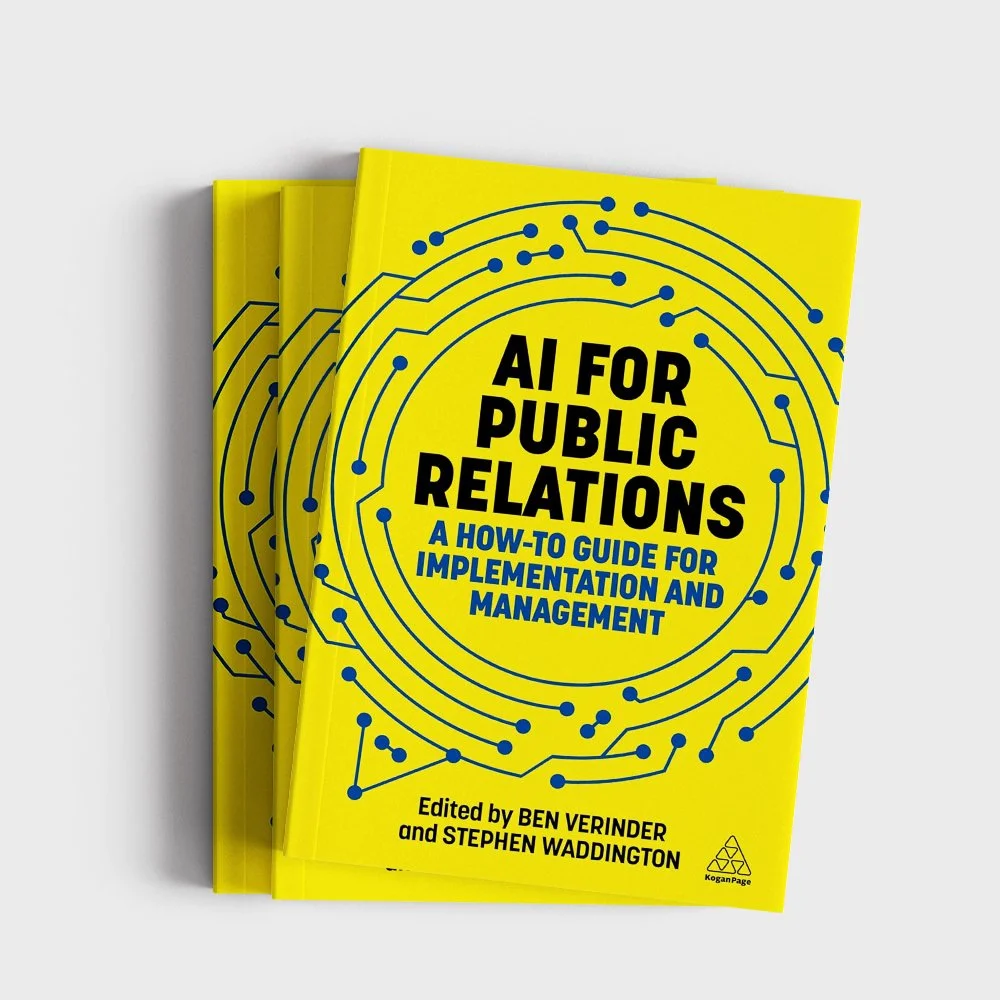
AI for Public Relations: A How-To Guide for Implementation and Management is a practical handbook produced by an expert community of practice.
It covers content creation, planning, insight, measurement, policy, governance and the management of AI within agencies and in-house teams. It is honest about the risks as well as the rewards.
All author proceeds go to Socially Mobile, the community interest company supporting UK practitioners from under-represented backgrounds into management roles.
The courses
Reading is a start. Implementation needs structure. Our one-day online course covers the three strategic imperatives from the book: embedding AI into workflows, understanding how AI shapes reputation, and advising on ethics, governance and trust.
Delivered by the editors. Maximum of eight participants per cohort. Also available as an in-house workshop for agencies and communications teams.
We are also developing an online on-demand learning programme based on the book. Register your interest and we will let you know when it launches.
Bespoke training and consulting
Every organisation is starting from a different place. We provide tailored training and advisory support on the issues raised in the book, from workflow and adoption to governance, policy and AI visibility.